


Nutiva Organic Hemp Oil Cold Pressed
Lowest price $21.65 Buy on Amazon
- Serving size: 1 Tbsp (15 ml)
- 32 servings per container
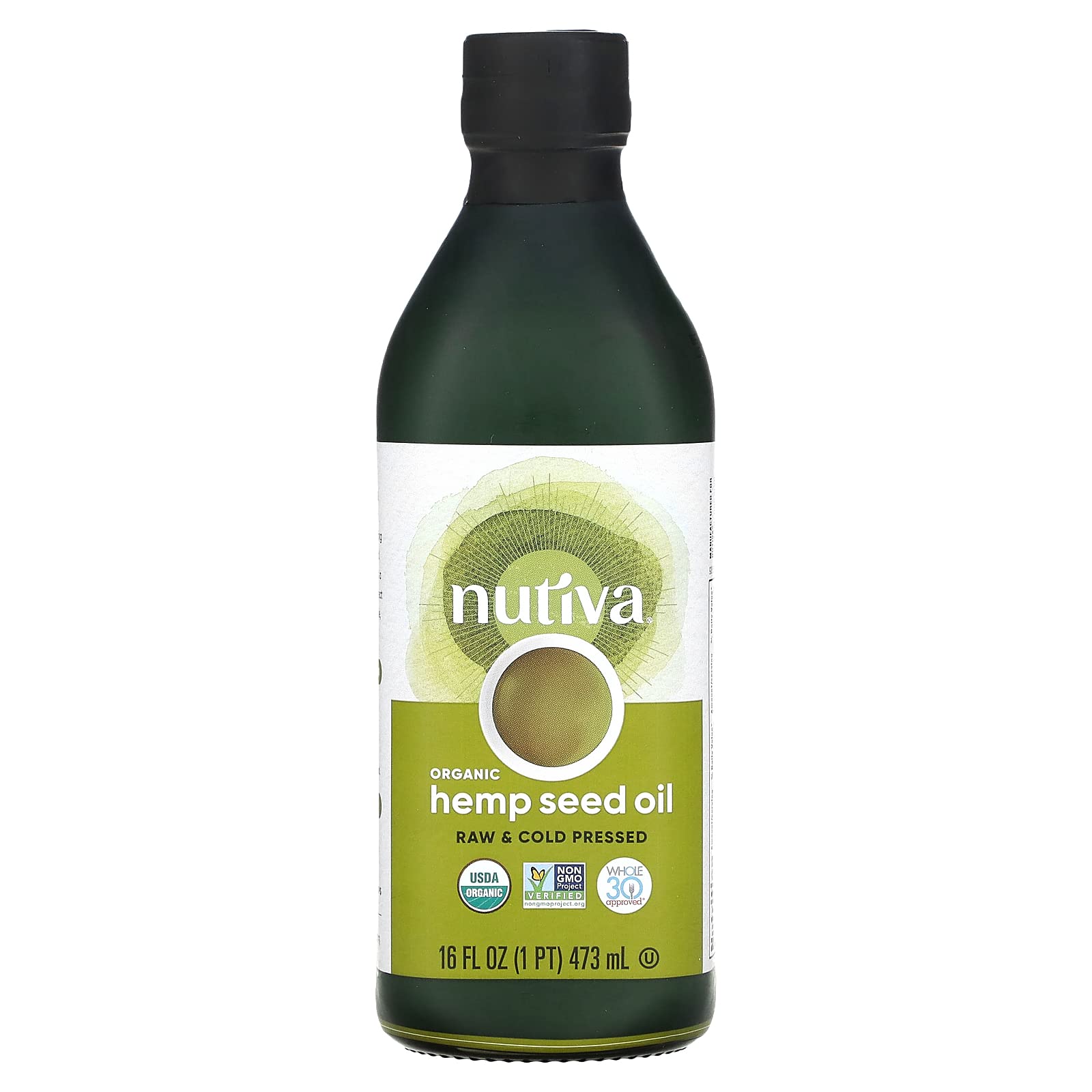
Overview

Data is still being collected — this section will be updated soon.
Supplement facts
Values as printed on the product label. We do not restate them in our own words.
| Per serving | Amount |
|---|---|
| Total Fat | 14 g |
| Polyunsaturated Fat | 11 g |
| Monounsaturated Fat | 2 g |
| Calories | 125 |
| Calories from Fat | 125 |
| Saturated Fat | 1 g |
| Trans Fat | 0 g |
| Cholesterol | 0 mg |
| Sodium | 0 mg |
| Total Carbohydrate | 0 mg |
| Protein | 0 g |
How to take it
Data is still being collected — this section will be updated soon.

Label warnings
Data is still being collected — this section will be updated soon. The absence of warnings here does not mean this product is safe for everyone. Read the warnings printed on the product label and talk to a healthcare professional before use.
Specifications
| Serving size | 1 Tbsp (15 ml) |
|---|---|
| Price per serving | $0.54 |
| Servings per container | 32 |
| Brand | Nutiva |
| Supplement | Hemp Oil |
| UPC | 692752100093 |
| ASIN | B00KO93FHW |
Compare with other Hemp Oil products
Other products we list for the same supplement. Listing order is not a measure of effectiveness.
Questions and answers
Answers about the product itself come from the label and the retailer listing; anything medical points you to a professional.
The serving size (1 Tbsp (15 ml)) is the amount the manufacturer intends you to take at once. All nutrient values below are calculated for exactly one serving — if you take a different amount, you need to scale the numbers up or down.
This bottle provides 32 servings in total. Divide the price by this number to get the real cost per serving — it is a more honest comparison than the sticker price when you shop across brand sizes.
One serving contains 125 calories. For most capsule and tablet supplements the calorie load is negligible; it matters more for powders, protein blends, gummies and meal-replacement products.
Total fat per serving is 14 g. This includes saturated, unsaturated and trans fats. For oil-based supplements (fish oil, MCT, evening primrose) the fat number IS the active ingredient; for capsule blends it is usually just carrier.
One serving contains 1 g of saturated fat. The FDA recommends keeping saturated fat below 10% of daily calories (~20 g on a 2,000-calorie diet). Powders and meal replacements can contribute meaningfully; capsule supplements almost never do.
Trans fat per serving is 0 g. The FDA considers trans fat to have no safe intake level, so a well-formulated supplement should show 0 g. Anything above zero usually points to partially hydrogenated oils, which are worth avoiding.
One serving delivers 11 g of polyunsaturated fat. This category includes omega-3 and omega-6 fatty acids. For fish, algal, flax and evening primrose oils, this number reflects the active fatty-acid content.
One serving contains 2 g of monounsaturated fat — the same family found in olive and avocado oils. It is generally considered heart-healthy and is a common carrier in oil-based softgels.
Cholesterol per serving is 0 mg. Only animal-derived supplements (fish oil, cod liver oil, gelatin capsules, some collagen and glandular products) contain dietary cholesterol. Plant-based products should show 0 mg.
One serving contains 0 mg of sodium. The FDA daily limit is 2,300 mg for adults. Most capsules and tablets contribute a trivial amount; watch this number in effervescent powders, electrolytes and mineral salts.
Total carbohydrate per serving is 0 mg. This sum includes fibre, sugars and starches. For capsule supplements the figure comes almost entirely from fillers; for powders and gummies it can be a meaningful part of your daily intake.
One serving provides 0 g of protein. For protein powders this IS the active ingredient — compare it against the serving size to get the protein-per-scoop ratio. For amino-acid supplements the number reflects the free-form aminos in the blend.

